Funk’s funeral? Did someone kill the groove?
Supposedly a high-energy and infectious genre, the spread of enthusiasm isn’t as prominent for this kind of music anymore. Has the love for Funk died?
It seems to be the most unrecognised genre of music at the moment, with voices like John Schofield, the American guitarist and composer, saying we need to “keep funk alive”.
I thought it best to find out where funk began to be able to consider if it could make a comeback and where it might go next…
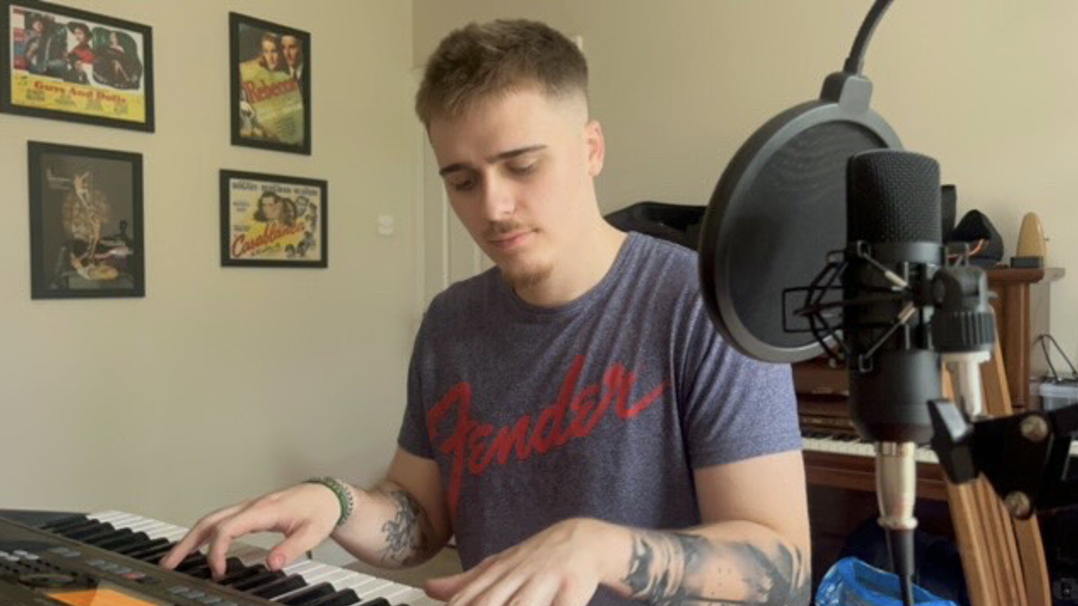
Gabriel Flude a funk musician.
I interviewed Dr Christopher Smith, a Professor of Musicology at Texas Tech School of Music, the Director of Vernacular Music Centre and Tech Folk Orchestra, 3-time author, about his knowledge on the subject and its history.
He believes “Funk as a genre evolves from a range of source music, but the conventional understanding is that it comes to fruition and becomes recognisable as a set of practices in the mid 1960s through the work of James Brown.”
“Another strand of influence is that of rock music, particularly in the late 1960s, and the influence of gospel music, particularly rhythmic styles and vocal techniques. Other innovative bands from the late 60s/early 70s are from the West Coast, most notably War and Tower of Power, were nearly as influential.”
“A second influence of funk comes from the innovations of players from New Orleans, most notably the studio quartet (bass, drums, keyboards, guitar) called the Meters.”
“A 3rd strand of influence is that of Latin American music, particularly but not exclusively the music associated with salsa and Latin jazz in New York City”
I then asked him his opinions on the future of funk and if it is still relevant in the music sphere we have created today. He replied, “As of 2025, funk is more a source strand of contemporary music's DNA than an area in which extensive innovation is happening. There is a resurgence of what we might call neo-funk, from bands like Corey Wong, who have a great deal of technique but, quite frankly, are. In my view, rather more derivative than innovative.”
“So, I would say that funk is more now a source of music. However, as with all the other source music I have mentioned, funk is an essential
part of the patchwork.
“Music would be very different had it never existed.”
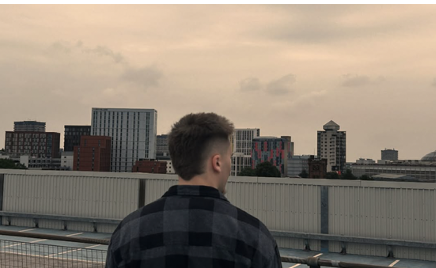
I spoke to a musician who is hoping to keep funk alive through his own music and through his volunteering with teaching children.

Gabriel Flude, who goes by GSolique, about his ties to Funk.
Gabe is a keyboardist and session musician, both within a
band (Tropical Harmony) and solo. He said that his “personal
background in funk comes from starting early on”; he’s been
playing piano for 15 years. He said, “The genre itself, the groove,
really speaks to me. It gives you that energy”
Gabe is currently in the process of releasing his own album
in the style of funk.
He believes that the future generations should have music around like funk because it is “musically rich and expressive, as well as inclusive. It encourages you to work with others to produce something. It teaches teamwork, confidence and networking. I’m involved in a few projects that work with children of all ages and abilities, including children with special needs. And funk, it connects with them, no matter what the instrument. With something that important, it is important for their growth.”
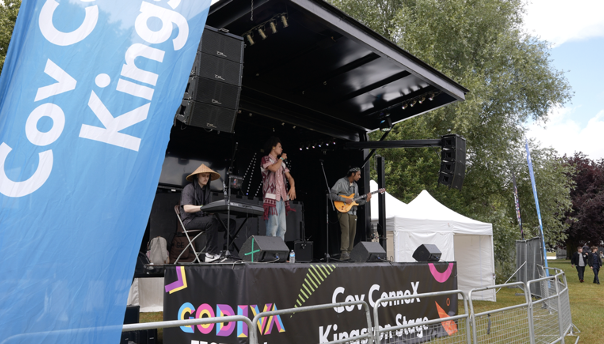
Tropical Harmony performing at Godiva Festival.
So, what could this mean for Funk?
Well, I guess that is down to you, and your own ‘Superstition(s)’…