Birmingham City Council has secured an interim High Court injunction restricting people from attaching flags to lampposts, bridges and other highway infrastructure without permission.
The ruling, granted by Judge Emma Kelly on Wednesday 18 November, follows months of controversy surrounding the display of Union and St George's flags across the city.
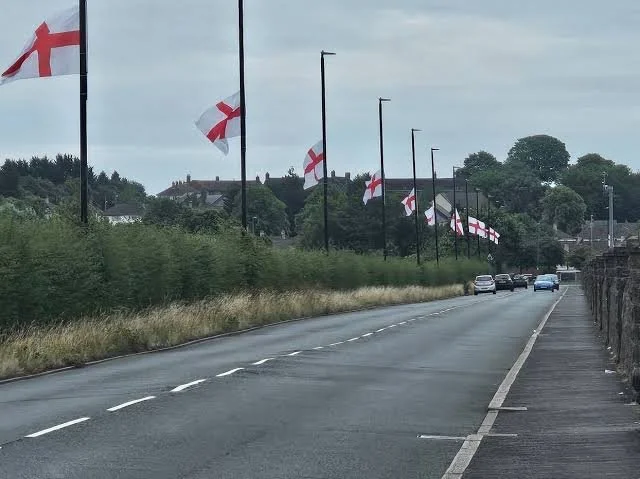
Flags on Bartley Green Reservoir.
The council sought the injunction against Raise the Colours co-founder Ryan Bridge, Ben Cullen, who is associated with the group, and "persons unknown" involved in attaching flags to public infrastructure.
It argued that the displays could create safety risks, obstruct visibility and contribute to tensions and disorder.
However, the ruling does not amount to a general ban on displaying British or English flags.
Judge Kelly made clear that the injunction is limited to unauthorised attachments to highway infrastructure within Birmingham. Residents remain free to display flags on their own property.
Dr Stuart MacLennan, Associate Professor of Law at Coventry University, explained that the order is an interim injunction, meaning it has been granted while the case awaits a final decision.
He said: "It is not a ban on flags – residents are free to fly flags on their own property, and it's not a ban on any specific flag."
The ruling also includes a power of arrest against Bridge and "persons unknown", meaning police may arrest someone without a warrant if the relevant legal conditions are met.
Breaching the injunction could result in contempt of court, with potential penalties including imprisonment of up to two years, an unlimited fine or the seizure of assets.
Raise the Colours has challenged claims that the ruling prevents people from displaying flags across Birmingham, arguing that it only concerns attaching them to public infrastructure without permission.
The decision has also raised questions around freedom of expression. Bridge opposed the injunction, arguing that it interferes with his rights to protest and express his political views.
The case continues to highlight the debate between public safety, freedom of expression and the use of public spaces across Birmingham.