I have just moved to England after living in Australia my whole life - a life I loved in a country I adored - so, I kept trying to convince myself that there were local, British campaigns that demanded more of my attention than one from the place I just left.
However, violence against women in Australia was officially declared a national crisis back in 2024 - but in September 2026, less than one month after I left, three women were murdered in their own homes, allegedly by men beknown to them, within just ten hours across the country.
It is not to say that there are not pressing issues in England and across the UK - but how could I ignore the guilt of being here, whilst my family and friends at home are constantly at risk of abuse and murder?
How could anyone?
According to a 2021-2022 Australian Institute of Health and Welfare (AIHW) safety study, one in four (2.3 million) women and one in fourteen (1.3 million) men have experienced physical or sexual violence by an intimate partner since the age of fifteen. Beyond this statistic are any number of people who don’t report their conditions or experiences, left hidden from any sense of a public eye or accountability.
But violence against women isn’t only the lives that are lost or the injuries that are treated in the healthcare system. It can be any kind of behaviour that causes or is intended to cause fear or harm; it is not always physical.
Violence also refers to any context where there is coercive control - abusive patterns of behaviour that “exert power and dominance in everyday life to create fear, control or manipulate others, and deny liberty and autonomy,” according to another AHIW campaign on Family and Domestic Violence. It includes financial abuse or stalking.
The AIHW lists a myriad of factors that influence the likelihood of someone experiencing domestic violence, including personal history of abuse, community level factors, relationship level factors, and societal level factors. Abuse isn’t always planned, and it’s certainly not always immediate and noticeable.
If a lack of education, communication, or understanding of Family Domestic Violence (FDV) leads you to the belief that no one in your life, including yourself, have experienced this, and it therefore doesn’t impact you… the impacts of family and domestic violence in Australia can be felt economically for the entire nation. In fact, according to KPMG’s study, it’s estimated the total cost of violence against women and their children was $26 billion AUD by 2016, with $4.1 billion of that being borne by the government. This is because there’s impact on Australia’s healthcare system, community services, lost wages, low productivity, and the housing market, according to AIHW.
Why was this declared a national emergency? Well, 80 women were killed by femicide in 2025, and in November of 2026 the toll of deaths by femicide is 59, according to the Red Heart Movement’s National Femicide Watch. 27 children have died each year, so far.
And as a reminder, 2025 & 2026 are the two years following the national emergency declaration. So why is this still happening?
Firstly, a declaration is NOT a solution. The millions of Australian women experiencing FDV don’t need a public service announcement - they need guarantees that there will be sustained support in separation from their abusers, they need to be taken seriously, they need systems that financially support them through this time.
She needs to be protected before it is too late.
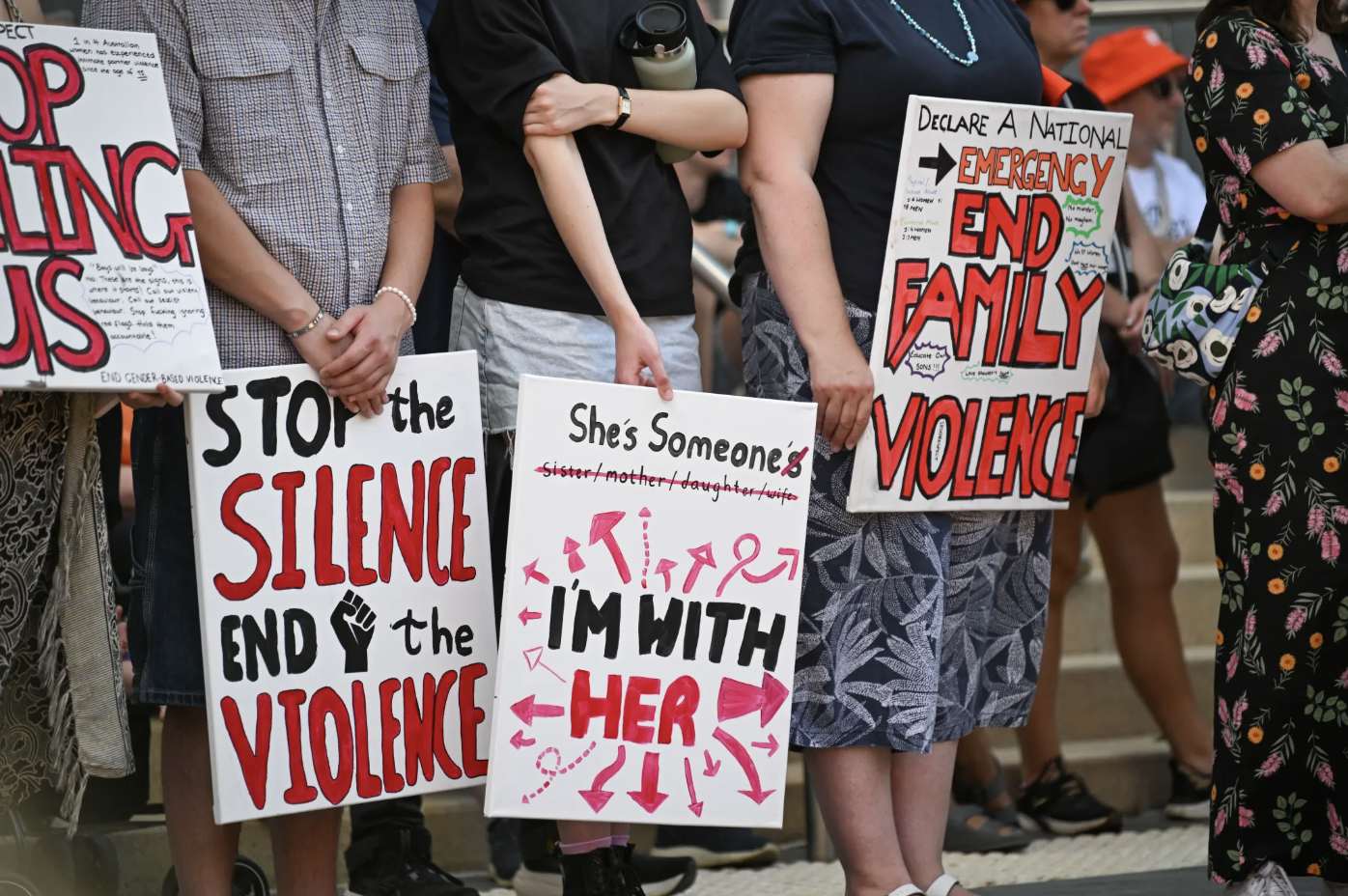
Source: Respect Victoria 2026
In response to these growing concerns, the Australian Government Department of Social Services released a ten-year National Plan to End Violence against Women and Children (2022 - 2032). The plan proposes four main focus areas:
Prevention
Early intervention
Response
Recovery & Healing.
But this is not enough.
The Leaving Violence Program (2025) is easily navigable and offers resources and assistance for women in abusive situations.
The experiences of Aboriginal and Torres Strait Islander women require specific attention, according to the Australian Government Department of Social Services - there are disproportionate rates of violence that accompany already systemic inequalities in accessing safety.
Almost three years since violence against women was declared a national crisis, it remains one of Australia’s leading headlines far too frequently. Government initiatives and plans, community organisations and fundraisers, or prevention campaigns surely create essential avenues for support, but nothing is as clear as the death of Australian women for the case of ongoing abuse remaining an issue in Australia.
I feel nauseous when I wake-up to headline notifications about the death of Australian women at 7am - I refuse to imagine how it would feel to be woken up at midnight by a call from my family members.
[792 words]