What you need to know about epilepsy this Purple Day
UK epilepsy charities are raising awareness about the neurological condition in celebration of Purple Day.
What should everyone know about epilepsy?
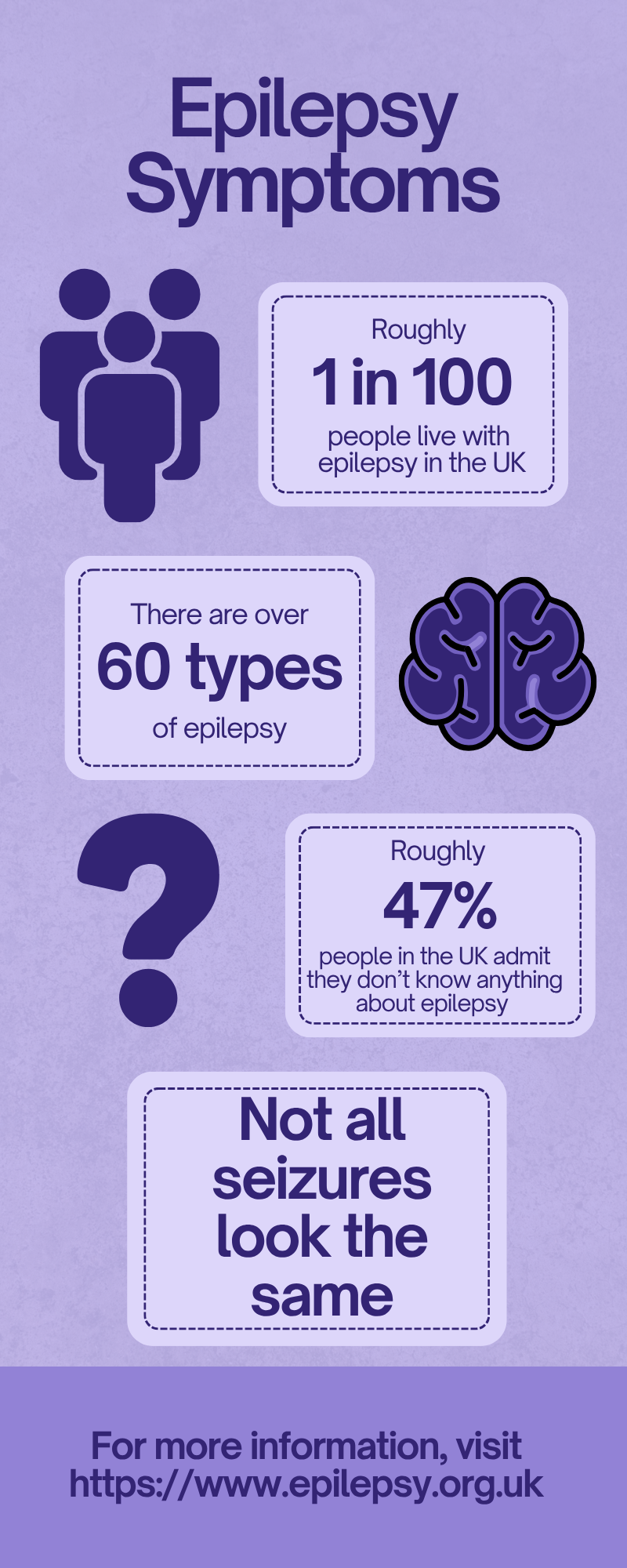
Chantal Spittles works for Epilepsy Action, a UK epilepsy charity. She explained the most important information people should know about the condition. She said, “Epilepsy is a condition that can happen to anyone at any time in their life – it’s one of the most common neurological conditions.”
“It’s also a really varied condition. Not everyone has tonic-clonic seizures, which you typically see in dramas or films, and not everyone is affected by flashing lights. A seizure can also happen anywhere. Someone with epilepsy can’t control where they have a seizure, but you can control what happens next. Epilepsy first aid is really easy to learn – all you need to do is CARE.”
What is Epilepsy?
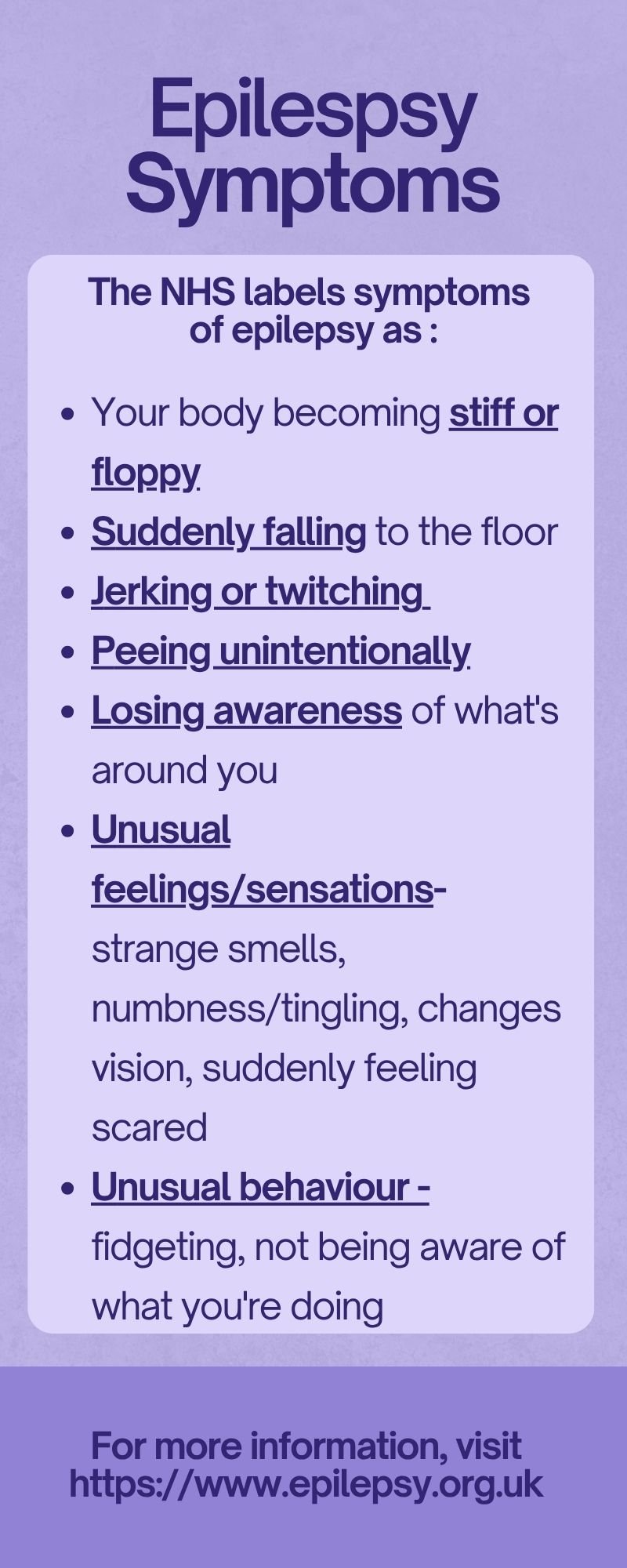
Almost 50% of adults in the UK admit they
don’t know anything about epilepsy, according to Epilepsy Action.
Epilepsy Action defines epilepsy as “a condition that affects the brain, causing repeated seizures.”
Seizures generally last only a few seconds or minutes, and usually stop by themselves. People often do not remember having a seizure once it’s happened.
What does a seizure look like?
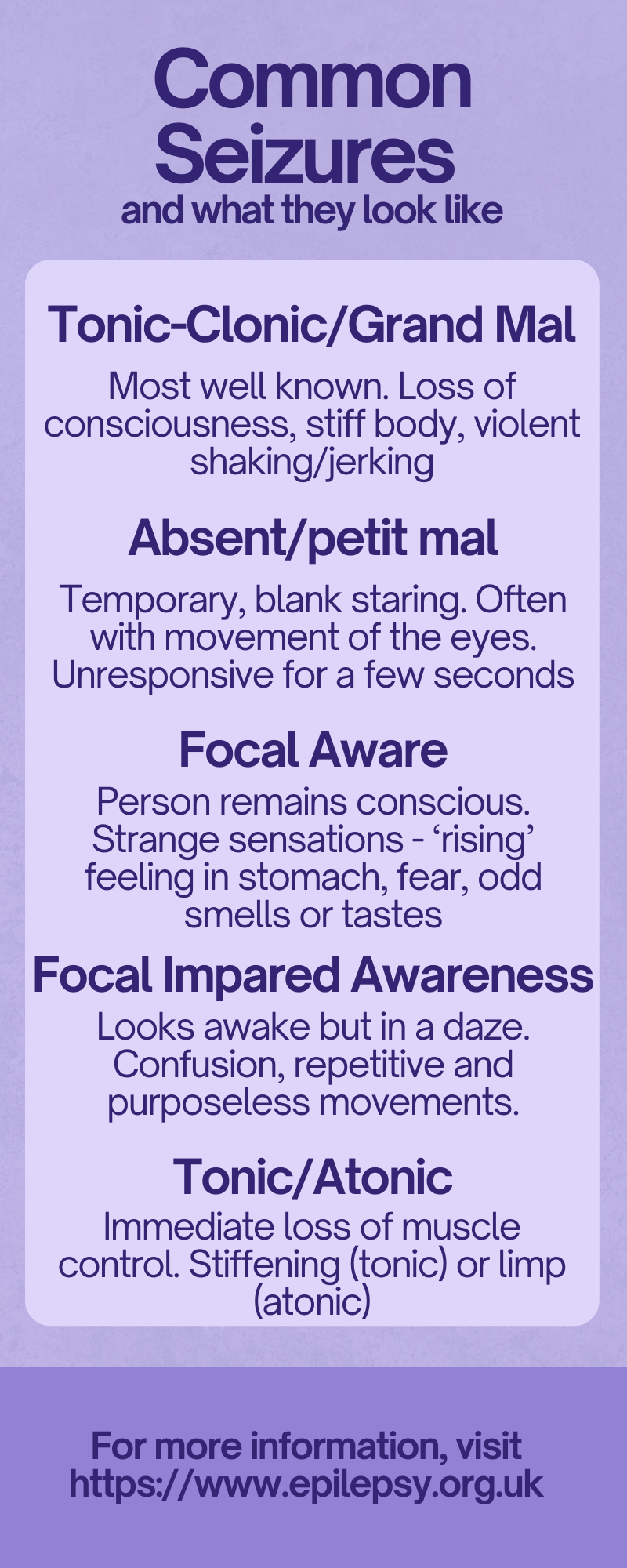
Not all epileptic seizures look the same. Some have more physical, obvious symptoms than others. Some are almost undetectable to those who are unaware.
Epilepsy First Aid - CARE
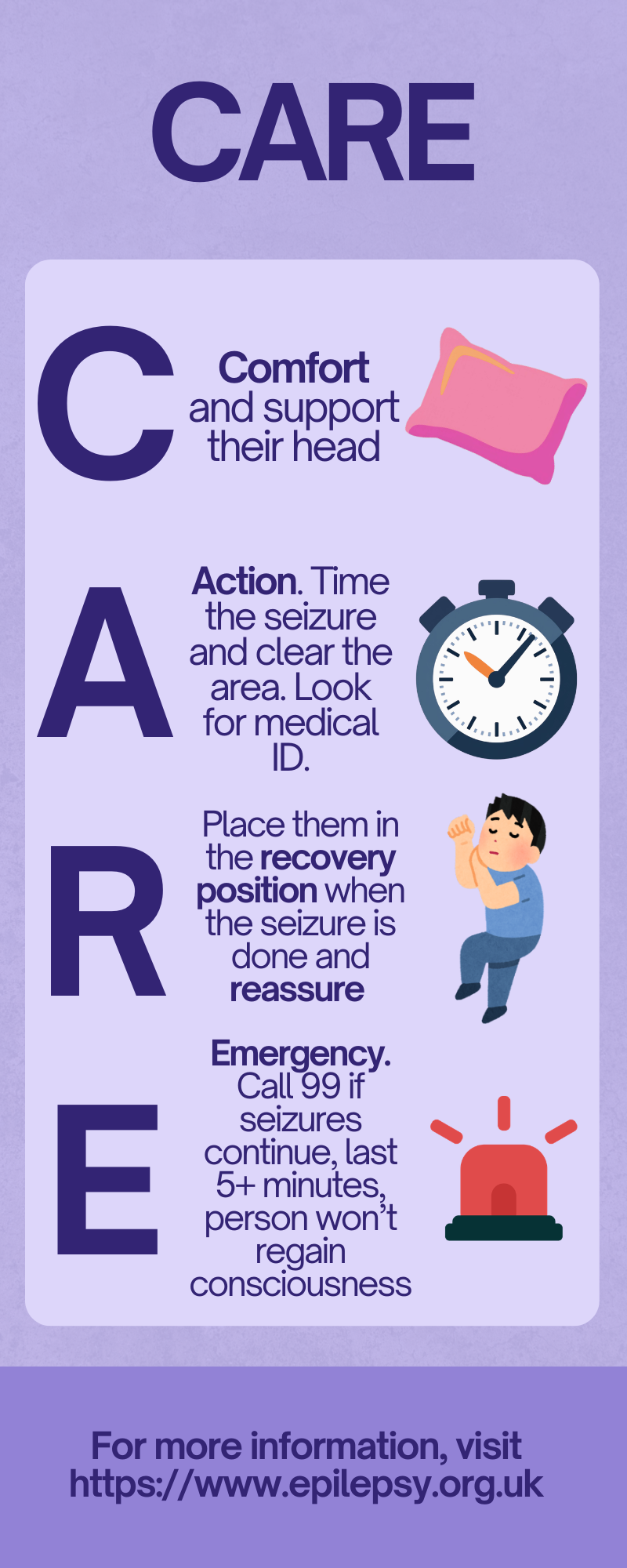
CARE stand for Comfort, Action, Recovery/Reassure, Emergency.
These are the key things to know when helping someone who is having a seizure.
What is Purple Day?
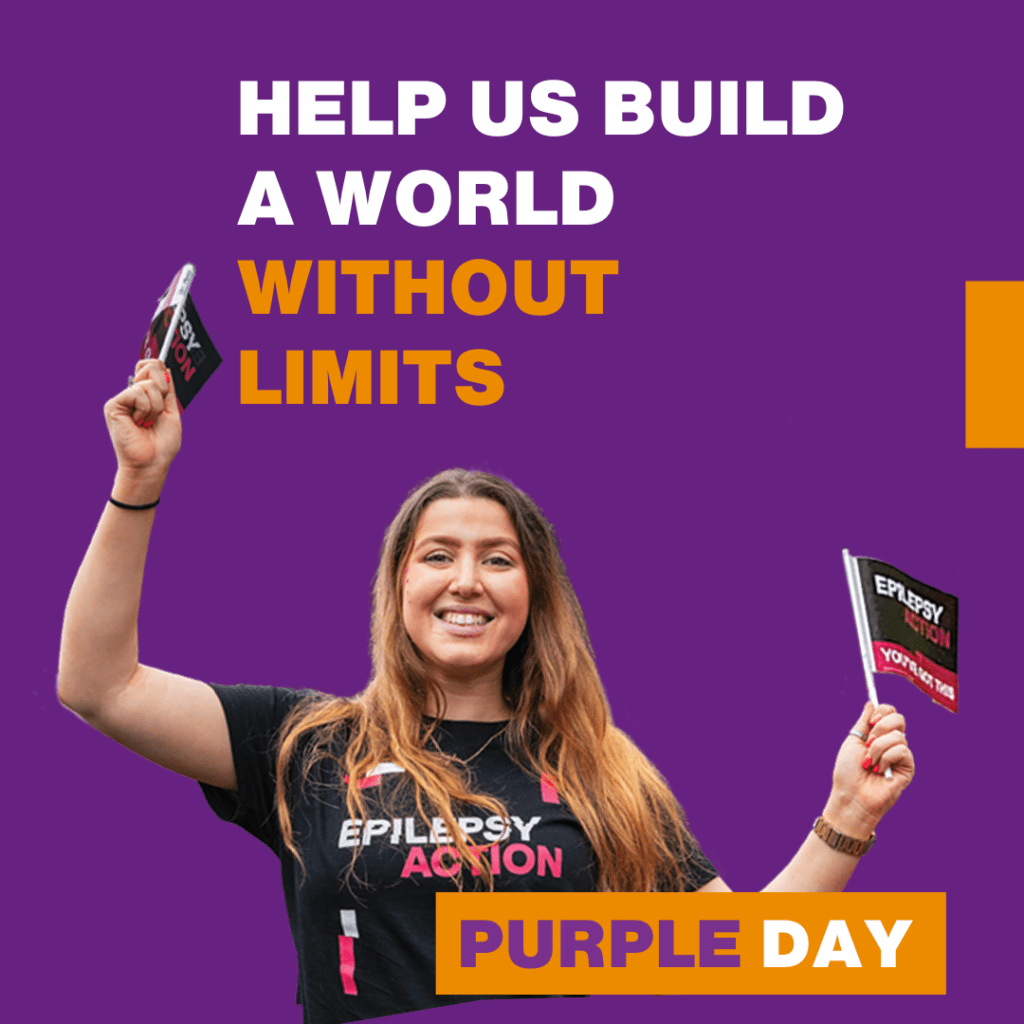
Image via Epilepsy Action
The 26th of March is International Epilepsy Awareness Day - also known as Purple Day. The day was created by Canadian Cassidy Megan in 2008. After being diagnosed with epilepsy at age seven, she wanted to raise awareness for the condition. Purple Day has become an international day to raise funds by wearing purple and hosting purple-themed fundraisers.
Epilepsy Action is a UK-based charity that supports those living with epilepsy and helps raise awareness about the condition. Chantal explained the significance of Purple Day and how it has evolved since its creation. She said, “It has grown to be a global day, with the 50 million people across the world who have epilepsy joining forces to share their experiences and help others affected to realise they’re not alone.”
Why is Purple Day so important?
Beth Baker-Carey, an Epilepsy Action story champion, shared her story with the charity. She said “Purple Day is about understanding, inclusion and standing beside those whose battles aren't always visible. It’s a chance to understand that epilepsy is more than just seizures. It can impact memory, mental health, employment, education and independence.”
“Before I was diagnosed, I didn’t have that much knowledge at all. The only real knowledge I had was about photosensitive epilepsy, like a lot of people. I knew my seizures weren't photosensitive-induced so I sought that knowledge after my diagnosis and I'm still learning.
For more information about Purple Day and Epilepsy awareness, head to https://www.epilepsy.org.uk.
For more information about epilepsy and symptoms, head to https://www.nhs.uk/conditions/epilepsy/