The Halo: Being seen or being safe?
Safety is the most integral part of any sport; the equipment and rules can be the difference between life and death. Casey Hardwick explores the ongoing and life-saving impact of 2018’s great safety introduction.
The Halo has been one of the most important pieces of safety equipment that has been implemented within motorsport. Since its introduction in 2018 it has saved countless drivers lives, spanning all types of open-wheel racing.
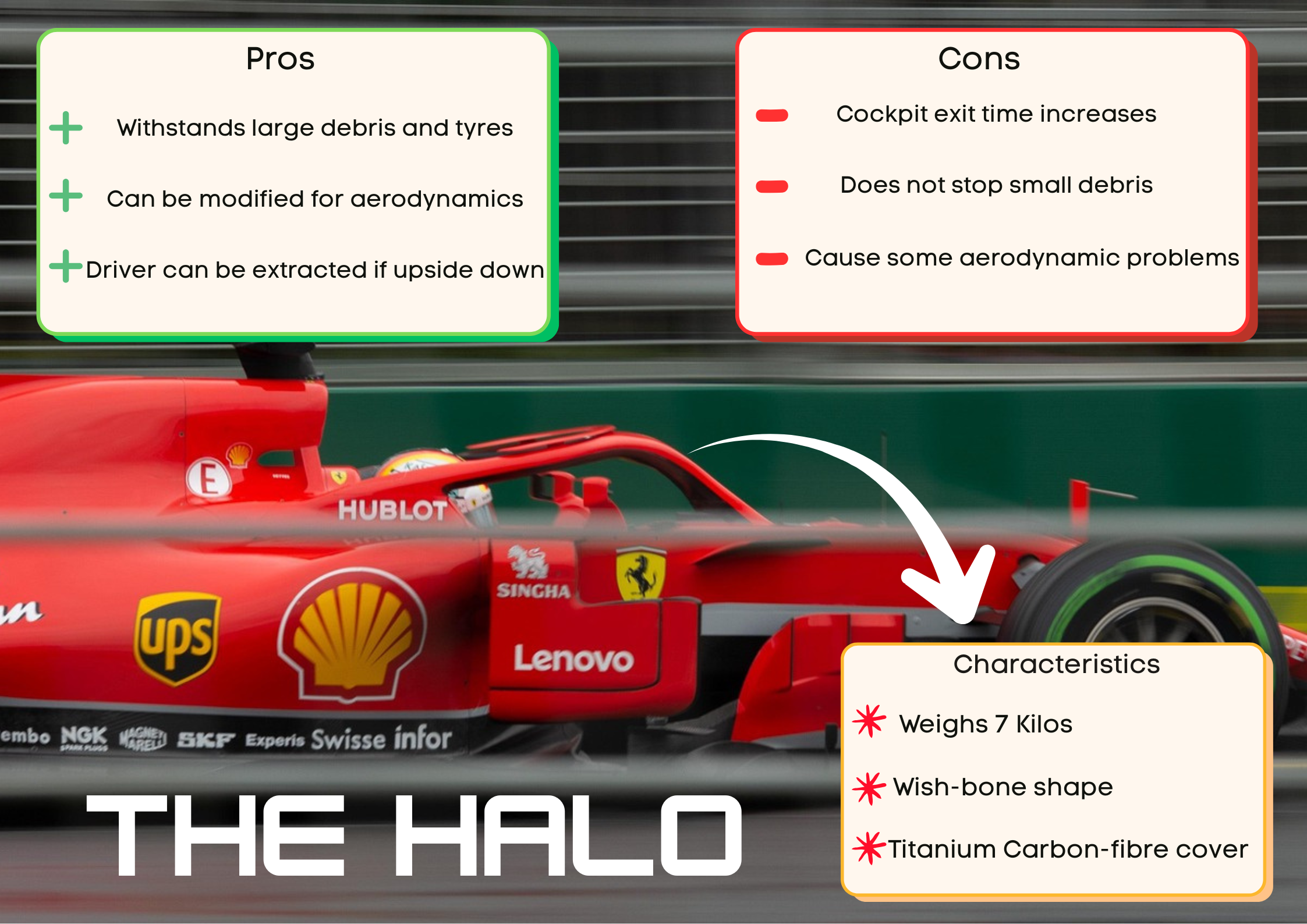
Explanation of the Characteristics: including the pros and cons of the Halo at launch.
Jules Bianchi’s death in 2015 after his crash at the Japanese Grand Prix in 2014 was one of the catalysts for the FIA making changes to cockpit safety. The FIA accelerated the implementation of the Halo as it was already in development, mandating it’s use from the start of the 2018 season.
Mike Samuels, a Videographer for GB4 Championship says “I think the halo has been a brilliant piece of safety equipment. That was introduced way too late. it's crazy that it took that many accidents and losses of life and major injuries for it to actually come into force and be implemented.”
“But the notion that it’s aesthetically unappealing, in one respect it’s nonsense. It doesn’t matter if it doesn’t look great if it saves life. That’s not rocket science.”
What Happened Next?
Following the announcement of the Halo into Formula One many drivers were not happy. This included, Max Verstappen (RedBull) who said that it "abused the DNA" of F1, which was "less dangerous than riding a bicycle in a city." Other drivers such as Lewis Hamilton (driving for Mercedes in 2018) and Pierre Gasly (raced for Toro Rosso at the time) noted its poor visual aesthetics. Mike Samuels said “As a videographer, I totally get that, because of the aesthetics of film. Seeing the cockpit, the helmet, seeing that coming towards you is gold for a videographer. But the notion that it's aesthetically unappealing, in one respect it's nonsense. It doesn't matter if it doesn't look great if it saves lives. That's not rocket science.”
Other driver concerns included an impact on visibility and access, though many came later to support it after it was proven to save countless lives, including Romain Grosjean’s crash in 2020.

Replica Lando Norris Mclaren at the 2023 Silverstone Grand Prix, within the Castore store.
Why is bringing the Halo up now significant?
For the Halo within Formula One specifically it has changed how the drivers are possibly injured during a crash, before 2018 drivers would suffer life-threatening trauma whereas now the Halo is just one piece of safety that reduces the chance of unimaginable injuries.
The Halo and initial controversy around it is comparable to going into the 2026 season where the FIA are removing DRS. They are changing it to MOM which just like the Halo has had conflict around it and speculation if it should be added into Formula One.
Eight Drivers that the Halo has saved since its introduction
Zhou Guanyu (Silverstone 2022) Lewis Hamilton (Monza 2021)
Fernando Alonso (Belgian GP 2018) Romain Grosjean (Bahrain 2020)
F2 Roy Nissany (Silverstone 2022) F3 Alec Peroni (Monza 2018)
Charles Leclerc (Spa 2018) W series Sarah Moore & Beitske Visser (Spa 2021)