Rebuilding Coventry’s Spirit: A 20‑Metre Cardboard Cathedral Rises
French artist transforms recycled cardboard into a towering symbol of hope and creativity.
Written by George Cooper
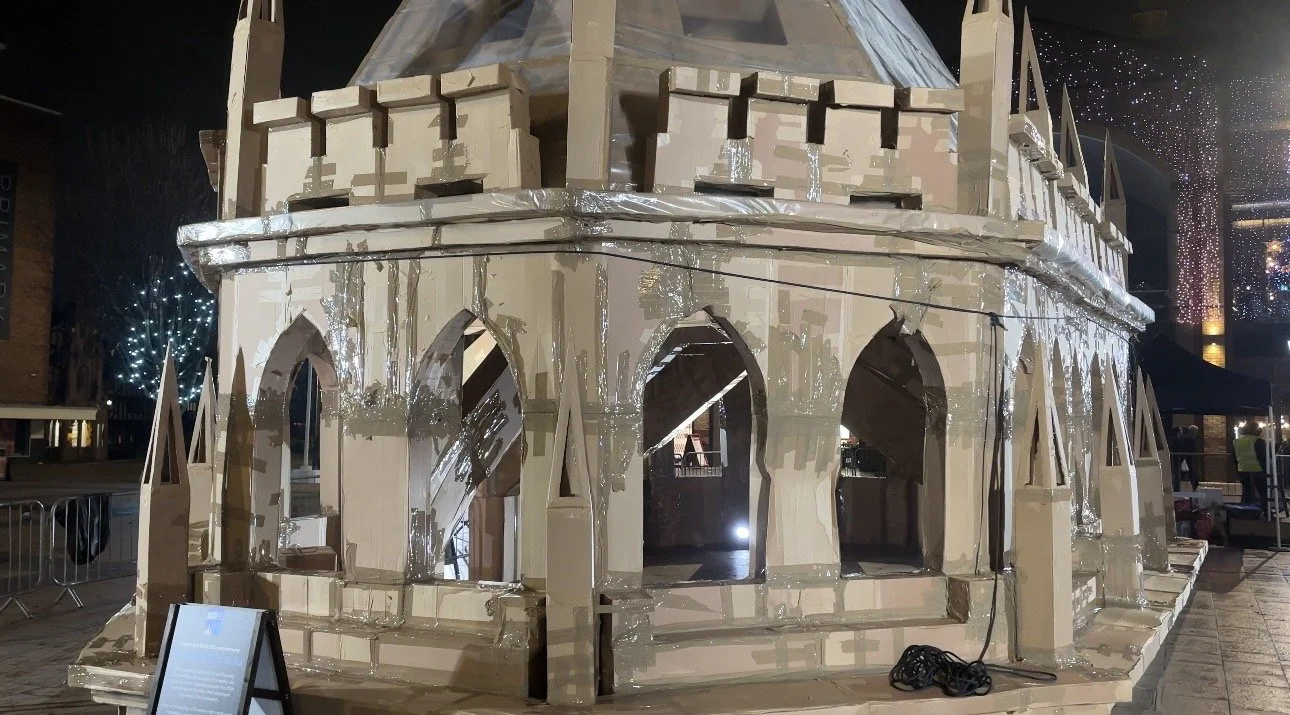
Image: George Cooper
Coventry commemorated the 85th anniversary of the Blitz this weekend with a striking act of remembrance. The construction and demolition of a monumental cardboard cathedral in the heart of the city.
The project, known as the Great Blitz Build, was both a tribute to resilience and a communal work of art. Echoing the spirit of unity that defined Coventry in the aftermath of the devastating raid of November 1940.
On the night of 14–15 November 1940, the Luftwaffe unleashed one of the most destructive air raids of the Second World War. More than 550 people were killed, thousands were injured and much of the city centre was reduced to rubble.
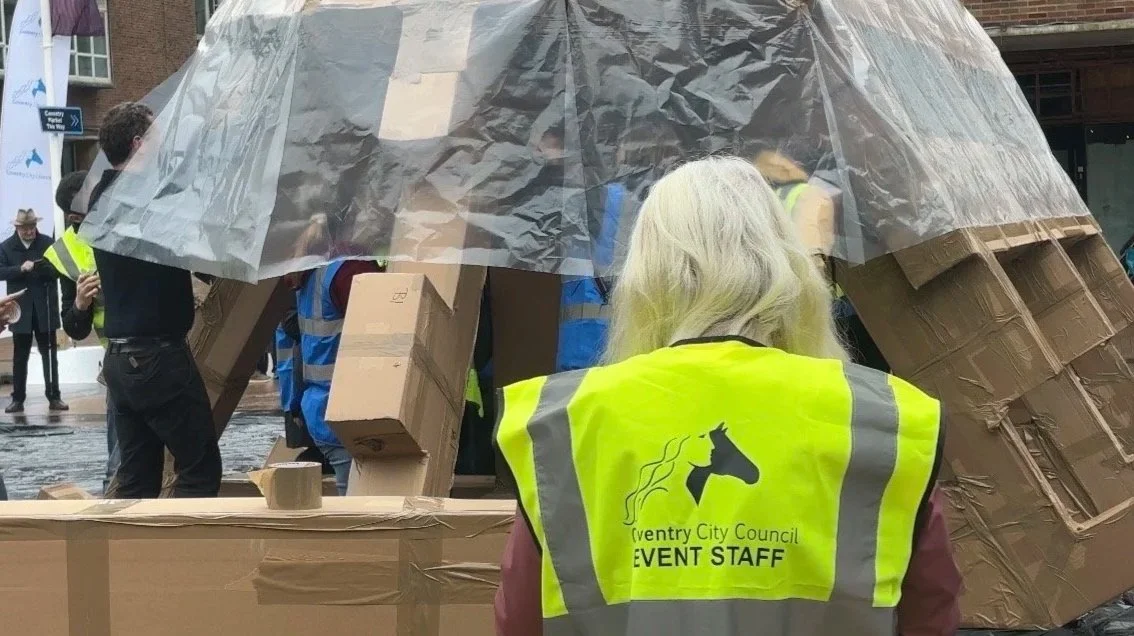
Image: George Cooper
The medieval St Michael’s Cathedral, a symbol of Coventry’s identity, was left in ruins. Yet from that devastation emerged a story of renewal. Coventry became a city of peace and reconciliation, rebuilding itself while forging international bonds of friendship.
This weekend’s cardboard cathedral captured that duality of destruction and rebirth. Under the guidance of French artist Olivier Grossetête, renowned for his large-scale cardboard installations. Hundreds of volunteers gathered at Drapers’ Hall throughout the week. Families, schools and community groups cut, folded and taped together thousands of cardboard pieces, transforming everyday materials into something monumental. By Saturday, a 20-metre-high structure, weighing more than a tonne and held together with 25 kilometres of tape, stood proudly in Broadgate. However, this project was never meant to last.
In a dramatic finale, participants tore it down, symbolising the destruction of the cathedral during the Blitz while celebrating Coventry’s enduring spirit of renewal. The act of dismantling was as important as the build itself, it stood as a reminder that memory is not static but something we continually reconstruct and reinterpret.
“ This is a community project, and it would be nothing without all of the people observing and supporting us. I think this art installation is a true testament to the historical significance of the Blitz” - Oliver Grossetête, Artist.
Image: George Cooper for Coventry City Council
The build demonstrated how large‑scale public art can avoid the heavy carbon costs often associated with construction. By sourcing materials locally and relying on human energy rather than machinery the project reduced emissions while maximising community involvement.
The act of dismantling was not just symbolic of wartime destruction but also a reminder of the importance of circularity in modern design.
As the cardboard was cleared away, what remained was not emptiness but a renewed sense of connection, both to history and to the environment.
“ Cardboard is not only sustainable and fits within the city's environmental goals, but it’s also such an inclusive material. Anyone can fold and tape cardboard together.” - John Holgan, Events Manager
The Great Blitz Build reminded Coventry that remembrance is not only about looking back but also about imagining a future built on peace, creativity and ecological responsibility. In this way, the cardboard cathedral stood as a testament to resilience in more ways than one: resilience of memory, resilience of community and resilience of the planet.