Foley: What’s all the noise about?
You hear thousands of sounds every time you watch a film. Footsteps, creaking doors, clinking glasses, crunching snow. Almost none of them were recorded on set. Samuel Clawley meets Barnaby Smyth, the Foley artist who builds the noise of your favourite movies from cornflour, meringue, and thin air.
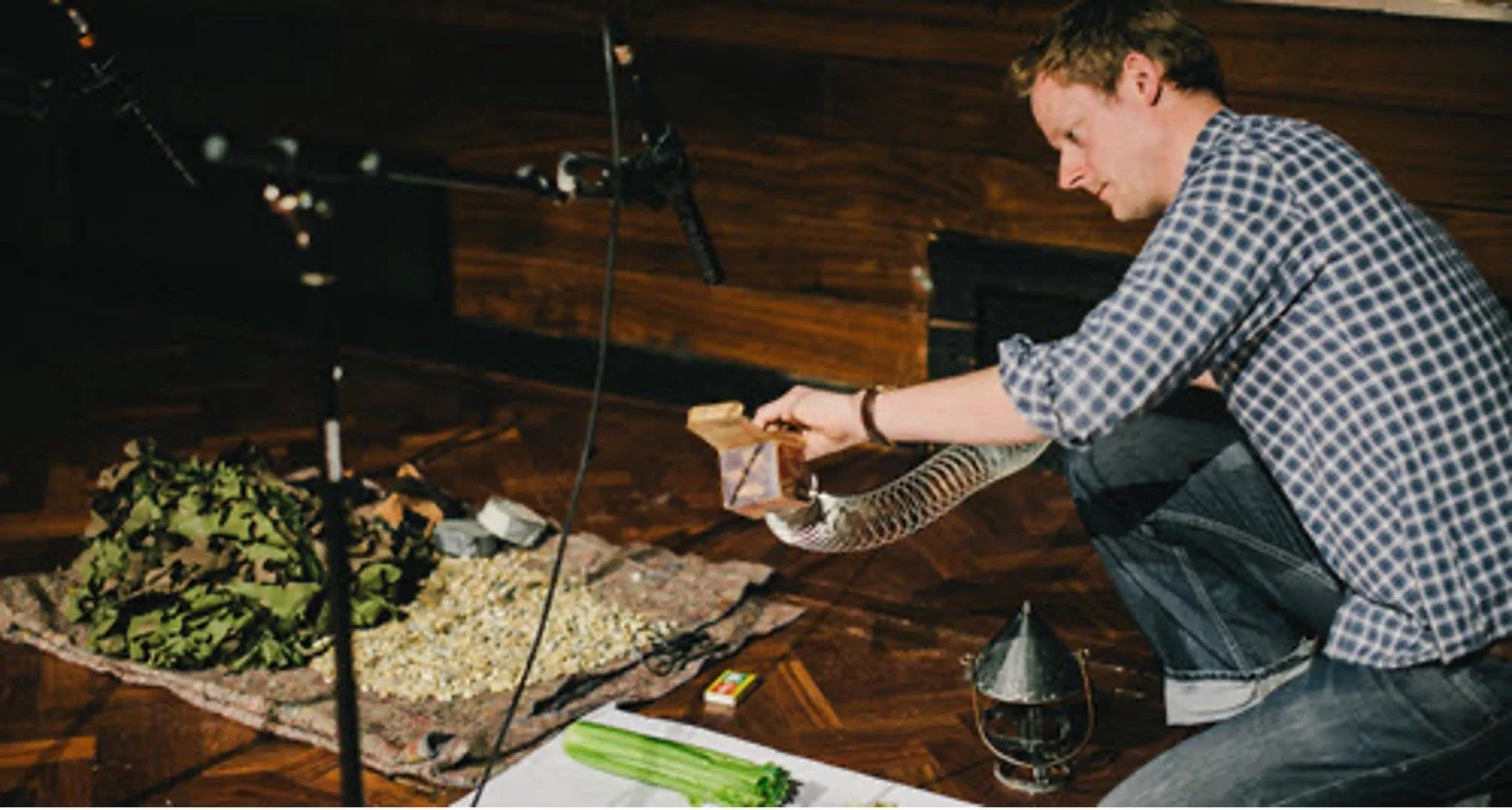
The footsteps. The creak of a floorboard. The clink of a teaspoon in a mug. The weight of armour as someone turns a corner. The soft drag of fur across a wooden floor. Almost all of it is added later, in a studio, by someone performing those sounds by hand.
That someone is a Foley artist.
Barnaby Smyth has been doing this work for more than two decades. He didn’t set out to. As a student, he made what he calls a “terrible” short film and added punches and kicks to it in post-production without realising there was a name for what he was doing.
“I was doing Foley before I even knew what Foley was,” he says.
Foley is the art of rebuilding reality. When dialogue is removed from a scene for dubbing, an entire layer of incidental sound disappears with it, footsteps, clothing movement, hands touching objects. Someone has to put that reality back in.
Early in his career, Smyth worked on international versions of The Vicar of Dibley, creating M&E (music and effects) tracks. “When you strip out the dialogue, you realise how much sound goes with it. All the tiny details vanish. That’s what we have to recreate.”
But realism isn’t quite the right word for what Foley does.
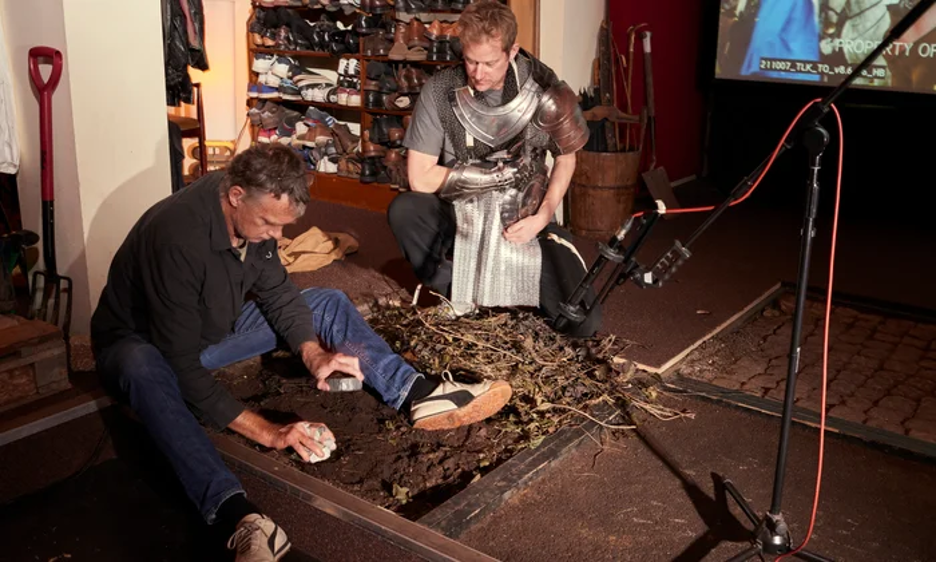
Barny, working on a movie set to create sound using abstract equipment.
“I know what the audience should hear,” Smyth explains. “That’s not necessarily what it would sound like in real life.”
If you put on a suit of armour and walk around, he says, it sounds underwhelming. A few dull knocks. A bit of clatter. Not the rich, weighty sound we associate with medieval drama. So Foley artists “cheat” it. They build the sound audiences expect, not the sound physics would produce.
The same logic applies to snow. Real snow rarely crunches in a satisfying way. In the studio, snow is created with cornflour for a dry creak, dishwasher salt for crunch, and crushed meringue nests for the brittle crust breaking underfoot. Layered together, it becomes something more convincingly “snowy” than snow itself.
“You’re giving the audience what they want to hear, without them knowing they want to hear it.”
Foley work is broken into categories: footsteps, cloth movement, and spot effects, glasses being picked up, chairs shifting, hands brushing surfaces. It is meticulous and repetitive. Smyth compares it to stop-motion animation. Tiny, incremental movements, repeated until the scene feels alive.
“It’s not all dragons and armour,” he says. “A lot of it is people picking up glasses and sitting in chairs.”
And yet, when it is done well, you never notice it.
On the historical drama Firebrand, starring Jude Lawand Alicia Vikander,Smyth and his team recreated the acoustic texture of ancient halls, wood, stone, fur, jewellery, shifting perspectives as characters move through space.
“About 90% of what you hear in that film is added sound,” he says. “But you’d never know.”
That, for Smyth, is the measure of success.
“When nobody realises it’s Foley, that means you’ve done your job properly.”
He notices it now when watching television. In a Slow Horses set in a decaying building, he admires the creaks and groans of the space. Bad Foley, especially footsteps, jumps out immediately. Good Foley disappears into the story.
Most audiences will never think about the work. They won’t picture cornflour in pillowcases or meringues under boots. They won’t imagine someone in a studio carefully performing the sound of a glass being put down, over and over, until it feels right.
They will just believe what they hear.
That is the noise Foley makes. The sound of a world being quietly built behind the scenes.